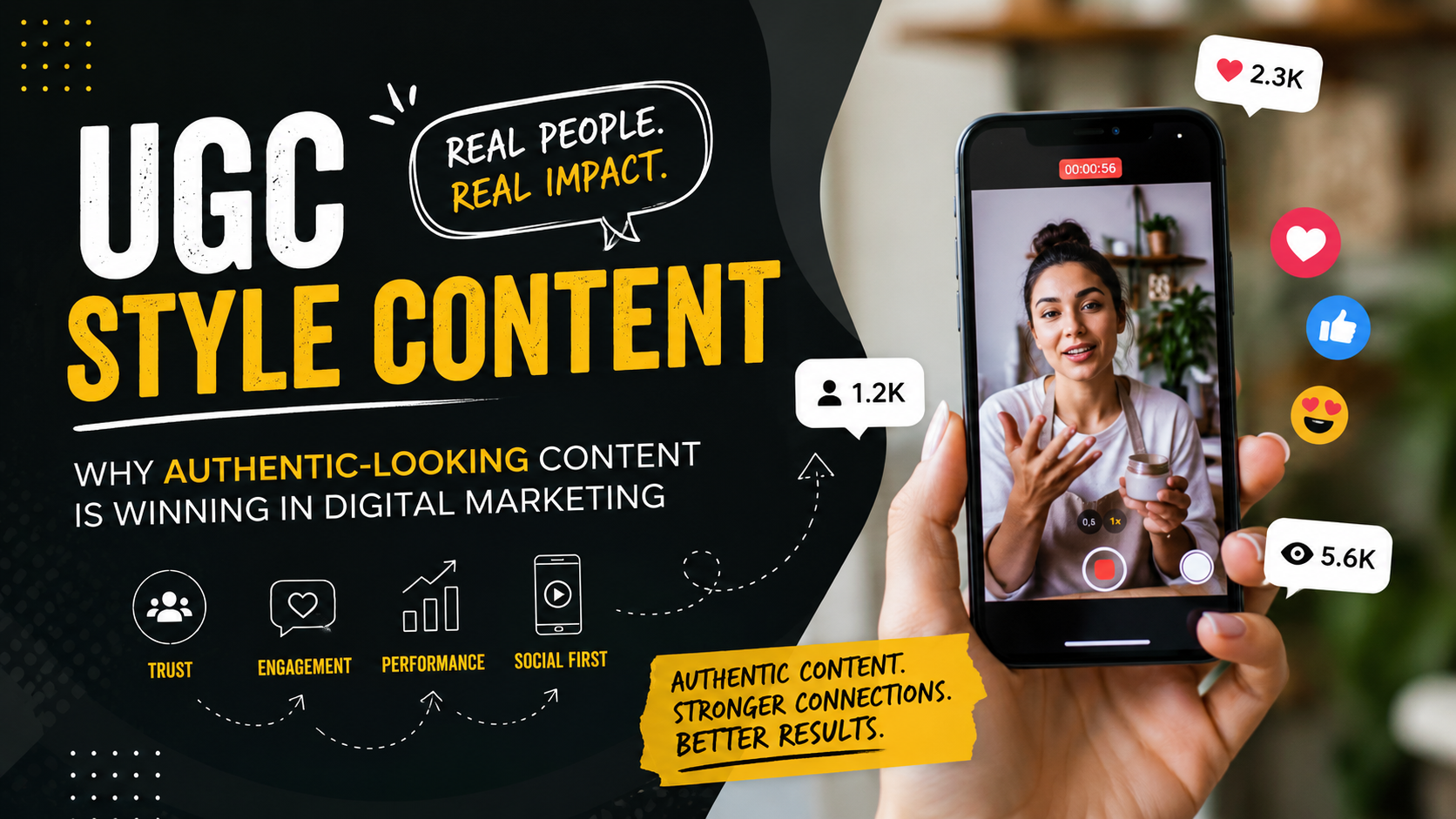
UGC Style Content: Why Authentic-Looking Content Is Winning in Digital Marketing
In a digital world full of polished ads, cinematic videos, and over-produced brand messages,
audiences are becoming more selective about what they trust. This is exactly why
UGC style content has become one of the strongest content formats in modern digital marketing.
What Is UGC Style Content?
UGC stands for User Generated Content. Traditionally, it refers to content created by real customers,
such as reviews, testimonials, videos, photos, and social media posts about a brand.
However, UGC style content does not always have to be created by actual customers.
Today, many brands work with creators to produce content that looks natural, personal, and experience-based,
instead of looking like a traditional advertisement.
In simple words, UGC style content is brand content that feels like it came from a real person,
not directly from a company.
Why Is UGC Style Content So Effective?
The main strength of UGC style content is trust. People are often more likely to engage with content that feels
honest, casual, and relatable. Instead of feeling like they are watching an ad, they feel like they are listening
to someone sharing a real opinion or experience.
This format works especially well on platforms like TikTok, Instagram Reels, and YouTube Shorts, where users prefer
fast, native, and human-centered content.
UGC Style Content vs. Traditional Advertising
Traditional ads usually rely on high production, professional scripts, studio lighting, and direct sales messages.
UGC style content, on the other hand, focuses on authenticity, storytelling, and relatability.
- Traditional content: polished, branded, scripted, and promotional.
- UGC style content: natural, personal, simple, and experience-driven.
This does not mean that professional production is no longer valuable. The real opportunity is knowing when to use
polished brand content and when to use more authentic creator-style content.
Examples of UGC Style Content
UGC style content can appear in different formats, including:
- Product reviews
- Before-and-after videos
- Unboxing videos
- Day-in-the-life content
- Problem-solution videos
- Customer-style testimonials
- Casual walkthroughs
- “I tried this” videos
Why Brands Should Use UGC Style Content
UGC style content helps brands communicate in a more human way. It can make the brand feel less distant and more
relatable, especially when the target audience is tired of direct advertising.
For businesses, this type of content can help with:
- Building trust faster
- Increasing engagement
- Improving ad performance
- Explaining products or services naturally
- Creating content that feels native to social platforms
- Reducing the “this is an ad” feeling
The Biggest Mistake Brands Make with UGC Style Content
Many brands think that UGC style content means simply filming a casual video on a phone. That is not enough.
Successful UGC style content may look simple, but it still needs strategy.
A strong UGC style video needs a clear hook, a relevant message, good pacing, a real problem, and a clear reason
for the audience to keep watching.
In other words, UGC style content should feel natural, but it should not be random.
How to Create Strong UGC Style Content
To create effective UGC style content, brands should focus on:
- A strong hook: Capture attention in the first few seconds.
- A real problem: Speak about something your audience actually cares about.
- Natural delivery: Avoid sounding too scripted or overly promotional.
- Clear storytelling: Show a situation, experience, or transformation.
- Simple visuals: Make the content feel native to the platform.
- A clear CTA: Guide the audience toward the next step.
Is UGC Style Content Right for Every Brand?
UGC style content can work for many industries, including real estate, beauty, fitness, restaurants, technology,
education, and service-based businesses. However, it must match the brand’s positioning.
For luxury brands, for example, the best approach may not be fully casual content. Instead, the strongest strategy
is often a mix between premium visuals and human, experience-based storytelling.
Final Thoughts
UGC style content is not just a trend. It reflects a bigger shift in digital marketing: people want content that feels
real, useful, and human.
Brands that understand this shift can create content that does more than look good. They can build trust, improve
engagement, and communicate with their audience in a way that feels natural and relevant.