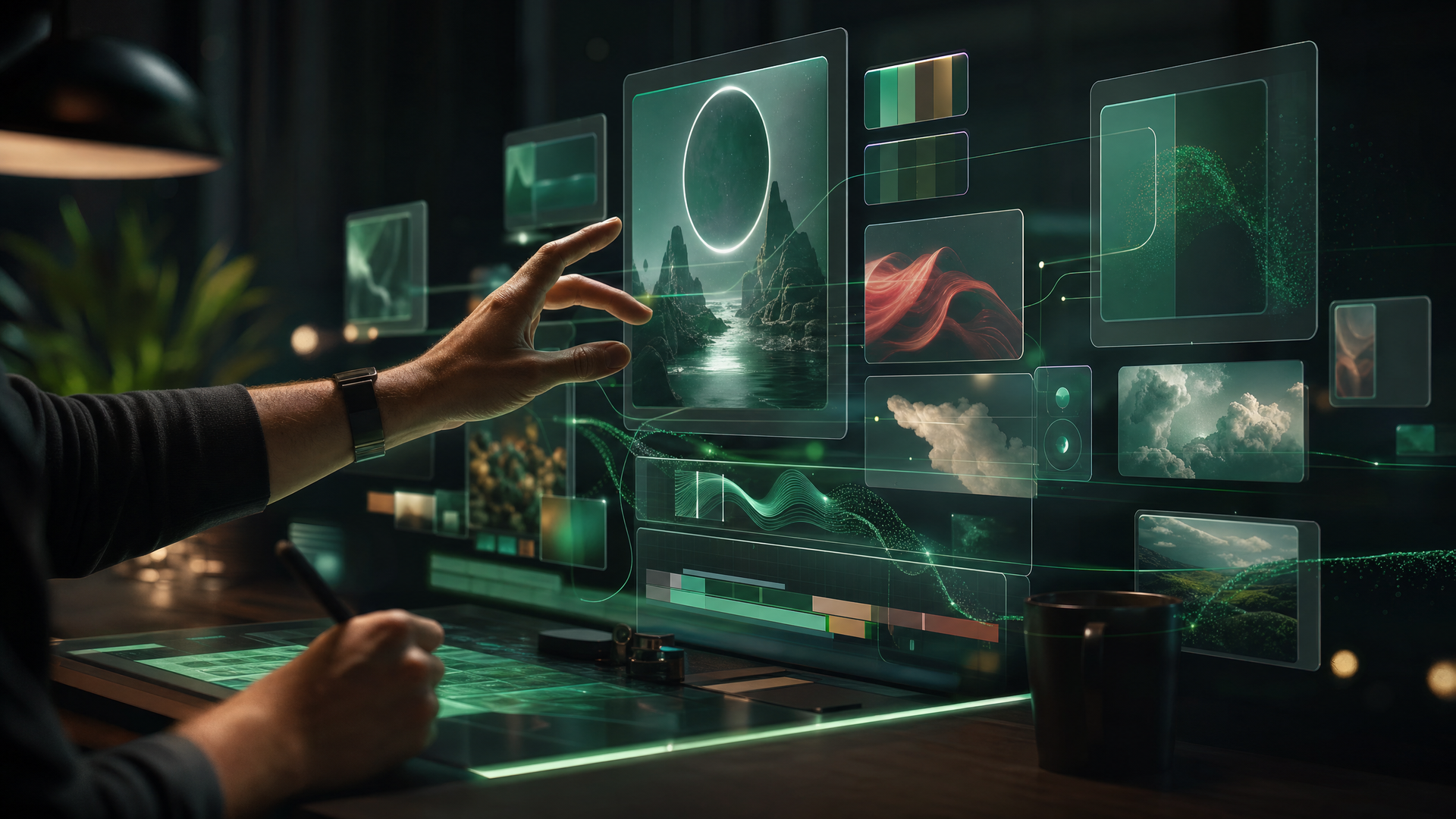
Creative Agents and the Rise of AI Creative Direction
Meta summary: AI creative agents are changing the way creators, marketers, and businesses turn ideas into finished content. The future of creativity will depend on whether humans remain the directors of the process.
Introduction: A New Era of Creative Work
Creative technology is entering a new phase. For decades, creators have worked through software by opening applications, selecting tools, adjusting settings, and refining every detail manually. This approach gave designers, editors, photographers, marketers, and content creators extraordinary control. Yet it also tied creative expression to the mechanics of software.
The rise of AI creative agents changes that relationship. Instead of simply responding to one command at a time, agentic AI can understand goals, plan multi-step workflows, connect tools, make decisions, and help complete complex creative tasks. This does not mean human creativity becomes less important. In fact, it makes human vision, taste, and judgment more valuable than ever.
What Are Creative Agents?
A creative agent is an AI-powered system designed to help people move from an idea to a finished creative output. It can support tasks such as brainstorming, image generation, video editing, layout creation, copywriting, asset adaptation, content localization, and campaign production. Unlike traditional software features, a creative agent can coordinate multiple tools and steps through a more natural, conversational experience.
This represents a shift from tool operation to creative direction. The user provides the concept, desired mood, audience, format, brand requirements, and final objective. The agent assists with the production process, but the human remains responsible for the story, the emotion, the quality, and the final decision.
Why Human Direction Still Matters
AI can generate, assemble, suggest, and optimize, but creativity is not only about output. It is about intention. A strong creative idea reflects perspective, context, taste, culture, and emotional intelligence. These are the qualities that allow a campaign to feel memorable, a video to feel authentic, or a design to communicate the right message.
The most effective use of agentic AI keeps humans in control. A creator may ask an AI assistant to explore visual directions, create variations, recommend a structure, or prepare draft assets. However, the creator still decides whether the work feels right. The creator judges whether the tone matches the audience, whether the composition is balanced, and whether the final result carries a human point of view.
From Clicking Through Tools to Directing Outcomes
Traditional digital creativity has often required users to move between different applications and repeat small technical actions. A video creator might organize footage, create a rough cut, adjust color, clean audio, design thumbnails, and export versions for multiple social platforms. A marketer might adapt a campaign into dozens of formats, sizes, messages, and languages.
Creative agents can reduce the friction in these workflows. A user could describe the intended result, and the agent could help analyze source materials, suggest a structure, prepare drafts, create variations, and recommend improvements. This makes the creative process faster, but more importantly, it allows people to focus more on the message and less on repetitive production tasks.
How Creative Agents Can Support Creators
For individual creators, AI agents can act as production partners. A designer building a personal brand could explore concepts, generate design directions, create social assets, test different color palettes, and draft supporting copy. A YouTube creator could use an agent to review raw footage, suggest a story arc, identify strong moments, create a rough edit, and prepare thumbnails or short-form clips.
This does not remove the creator from the process. Instead, it changes the creator’s role. The creator becomes the director who defines the vision, reviews the options, refines the details, and approves the final work. The agent accelerates execution, while the human protects originality and meaning.
Creative Agents in Marketing and Enterprise Teams
Marketing teams face constant pressure to produce more content across more channels. Campaigns must be adapted for websites, email, social media, paid advertising, presentations, videos, and regional markets. At the same time, brands must maintain consistency in tone, design, compliance, and quality.
Creative agents can help enterprise teams manage this complexity. They can identify reusable assets, make quick edits based on stakeholder feedback, generate personalized campaign variations, and support localization. In this model, marketers provide strategic direction, creative teams preserve craft and brand quality, and AI agents handle repetitive production work.
The Risk of AI Slop and Creative Uniformity
The promise of creative agents comes with an important warning. If AI is used only to produce faster and cheaper content without human judgment, the result can be generic, repetitive, and forgettable. Audiences are already becoming more aware of content that feels overly polished but emotionally empty.
This is why human oversight is not optional. Brands and creators need clear creative standards, strong review processes, and a commitment to originality. AI should support the creative process, not flatten it. The best results will come from combining machine speed with human taste.
The Future: Everyone as a Creative Director
The next generation of creative tools will make it easier for people to express ideas without needing to master every technical step first. This could open creative production to more people, from small business owners and educators to independent creators and enterprise teams.
However, the most meaningful future is not one where AI replaces creators. It is one where more people can become creative directors of their own ideas. In that future, technology handles complexity in the background while humans guide the vision, shape the emotion, and make the final creative choices.
Conclusion
Creative agents are not just another software feature. They represent a new way of working, where people can direct outcomes through language, intent, and imagination. For creators and marketers, this creates an opportunity to work faster, produce more variations, and reduce repetitive tasks.
The real value of AI in creativity will depend on how it is used. When human direction remains central, creative agents can expand expression, improve workflows, and help ideas move from imagination to reality. The future of creativity should not be less human. It should be more accessible, more expressive, and more deeply guided by human vision.